Most localization projects run on isolation. A multilingual project brings together a large pool of linguists, testers, and audio directors, spread across languages, time zones, and disciplines. All chasing the same thing: a game that lands in its market and pulls players in.
That isolation has a cost, and it's not the one people assume. LQA usually catches errors before players ever see them. The real cost is quieter: the same problem gets solved again and again, separately, in every language. Inconsistencies pile up, and LQA burns hours on what a thirty-second conversation would have prevented.
What the collaboration feature is
Every Alocai project includes a built-in collaboration layer: chat rooms per language, a general channel across the whole project, and dedicated terminology threads. All of it customizable per project, all of it scoped to that project's stakeholders only. When the project ends, the room ends. No rotting channel nobody checks.
Linguists post under a pseudonym assigned by the Project Manager. Identities are shielded from broad exposure, but accountability stays intact, because the PM always knows who is who.
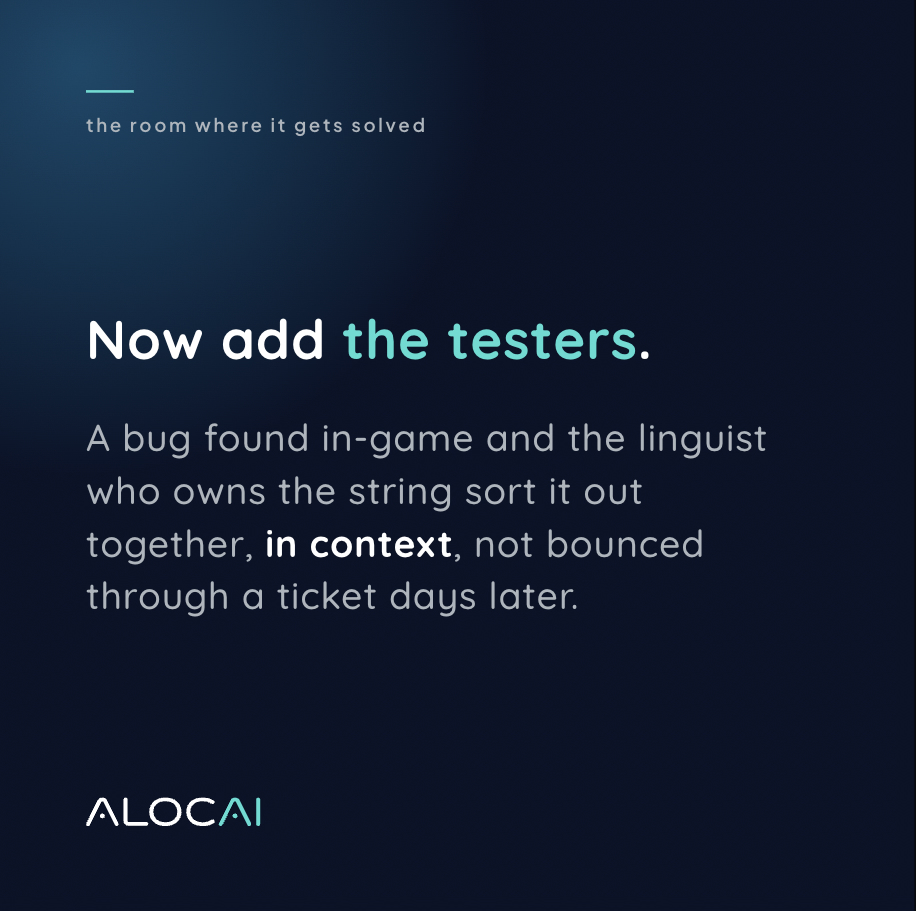
And this is the part most vendors don't do: testers are in the same room. A bug found in-game and the linguist who owns the string sort it out together, in context, not bounced through a ticket days later. Most of the industry runs testing as a separate, delayed loop. Alocai treats it as one conversation.
What this looks like in practice
A tester spots a bug that isn't one occurrence. It's a hundred across the build. Because they can talk directly to the linguist, it gets solved once, not every instance costing hours later.
A linguist hits a variable with no context. Instead of guessing and moving on, they ask the room: "I've got this variable, how are you handling it?" Someone who cracked it yesterday saves everyone else from hitting the same wall.
The same principle extends to voice over recording. When an audio director wants to change a term during a session, the difference between an expensive re-record and a thirty-second check is whether they can reach the people who locked that term. The linguist can't be in every session; there's rarely the time or the budget. Connection is what covers the gap.
Not the same thing as Q&A
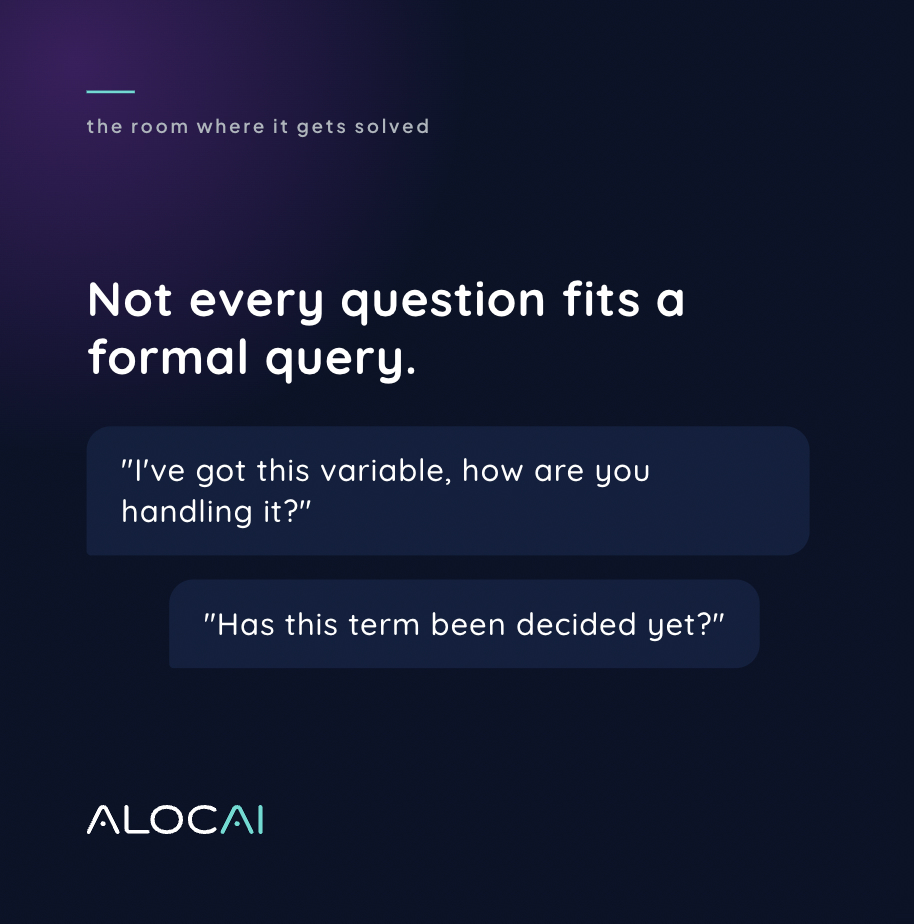
Alocai also has a Q&A tool, and the two are deliberately different. Q&A is the authoritative channel: one question, one answer, on the record, when you need a ruling from the client and need it logged. The chat is the live channel: fast peer help, sanity checks, terminology, everything a formal query format can't hold. Not every question fits a formal query. A team needs both.
Why the PM doesn't drown
An open room across a full multilingual team sounds like chaos. It isn't, because the Project Manager sees every thread, every language, in one place, and steers small things before they get big. That visibility is the difference between a community of practice and a noisy channel.
The point
Solo, you get good linguists and testers. Together, you get one team that keeps getting better. Tools and workflows help, but only because they get people talking, not because they replace it. AI makes each person faster. It can't be the community of people that makes the result better.
See the collaboration feature inside a live project. Book a demo.